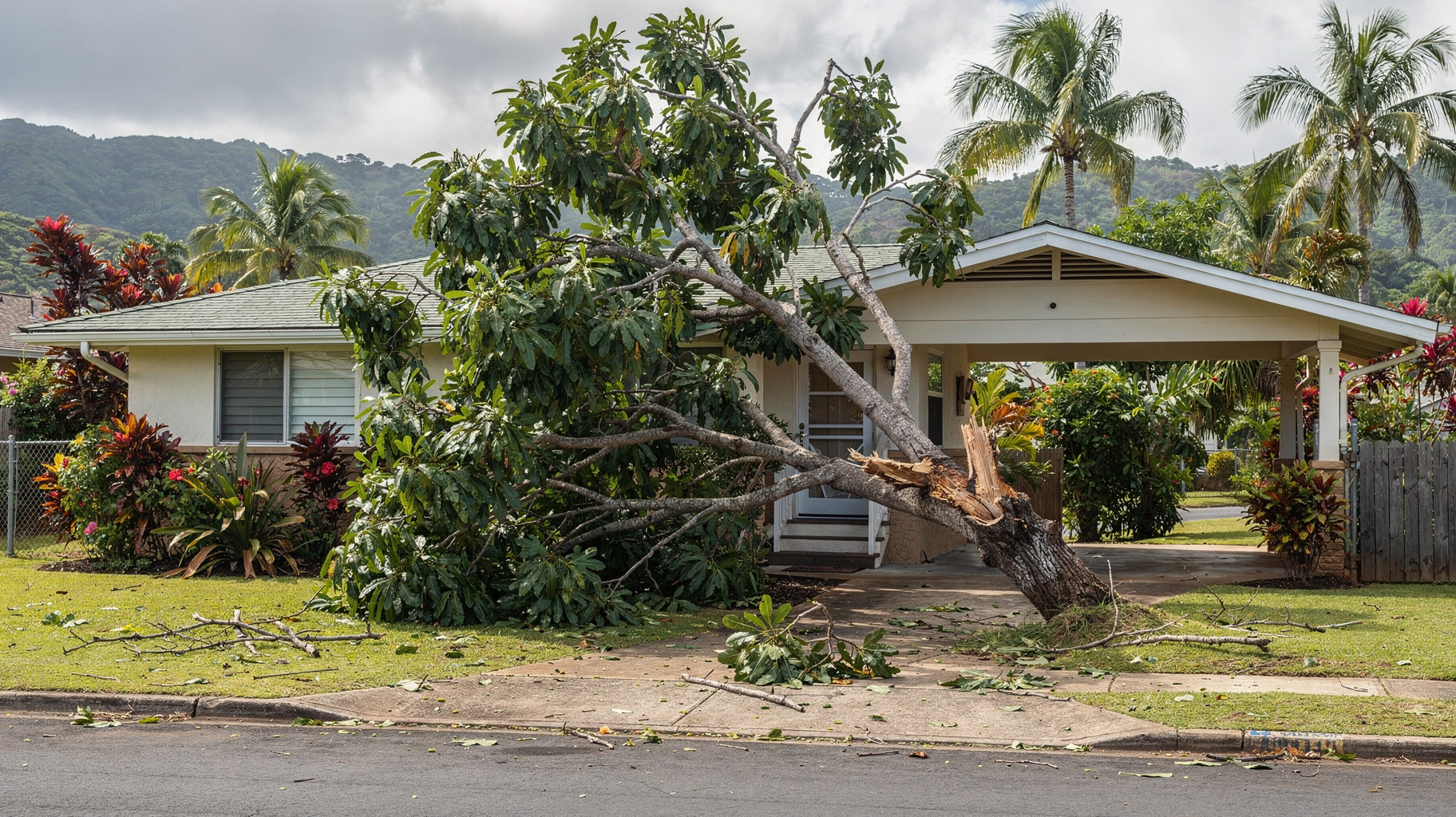
When Trees Become Urgent Hazards in Honolulu
Tropical storms, sudden branch failure, and root destabilization can turn healthy-looking trees into immediate threats. In neighborhoods from Manoa to Kaimuki, mature trees near homes, power lines, or roadways sometimes fail without warning—especially after heavy rain saturates volcanic soil or trade winds gust unexpectedly. Emergency tree removal focuses on safely addressing trees that have already fallen, are leaning dangerously against structures, blocking access routes, or pose imminent risk of collapse. Unlike routine tree work scheduled weeks in advance, these situations demand rapid assessment and careful execution to prevent injury or further property damage.
Recognizing True Tree Emergencies
Not every concerning tree situation qualifies as an emergency, but certain conditions require immediate professional attention. A tree resting against your roof in Nuuanu after a storm, a split trunk threatening to drop a massive limb onto your carport in Moiliili, or exposed roots undermining a retaining wall in Alewa Heights all represent genuine hazards. Trees blocking driveways or entangled in utility lines near Diamond Head also need urgent response. However, a tree that has been leaning for months or a branch you've been meaning to trim typically allows time for scheduled service. Understanding the difference helps you communicate the situation clearly when submitting an inquiry and ensures appropriate prioritization when connecting with local providers.
Factors That Complicate Emergency Removal Work
Emergency situations rarely offer ideal working conditions. Trees may be partially collapsed, creating unpredictable tension and compression forces that make cutting extremely dangerous without proper technique. In densely built areas like Kakaako or Downtown Honolulu, limited access means equipment options may be restricted, requiring more labor-intensive rigging and manual work. Trees entangled with power lines demand coordination with utility companies before any cutting begins—never attempt to remove a tree touching electrical wires yourself. Saturated ground conditions after heavy rain can make the work site unstable, and working around already-damaged structures requires extra caution to avoid causing additional harm. These complexities explain why emergency tree work often involves different considerations than routine removal.
Preparing for Emergency Tree Assessment
When you submit an inquiry about an emergency tree situation, clear documentation helps providers understand the urgency and scope. Take photos from multiple angles showing the tree's position relative to structures, power lines, and access points. Note whether the tree is actively shifting, making cracking sounds, or appears stable in its current position. Identify any immediate safety concerns—if the tree has damaged your roof or is blocking your only exit, mention that specifically. Keep people and pets away from the hazard zone until a professional assesses the situation. If power lines are involved or the tree blocks a public road, contact the appropriate utility company or city department in addition to submitting your tree service inquiry. This preparation helps ensure you connect with providers equipped to handle your specific emergency situation safely and effectively.
Technician insight
In Honolulu, the thing that catches most people out with emergency tree removal is underestimating how quickly our volcanic soil loses stability after heavy rain. A tree that looks solidly rooted in Palolo or Manoa can shift dramatically once the ground saturates, and what seemed like a stable lean in the morning can become a full collapse by afternoon. The other surprise is how many seemingly healthy trees have hidden rot inside—our warm, humid climate accelerates internal decay that isn't visible until a storm exposes the weakness. Always assume a compromised tree is more unstable than it appears and keep everyone well clear until a professional evaluates it.
Storm-Damaged Monkeypod Threatening Kaimuki Home
After a night of unusually strong trade winds, a large monkeypod in a Kaimuki backyard split vertically, with half the crown leaning heavily against the home's second-story lanai. The homeowner heard cracking sounds and noticed the tree shifting slightly. The provider secured the area, used rigging to control tension, and carefully sectioned the compromised portion away from the structure. The remaining trunk was stable enough for scheduled removal later, eliminating the immediate danger without causing roof damage.
How it works
- 1
Submit Your Emergency Inquiry
Contact us with details about the tree emergency—location, what happened, immediate hazards, and access concerns. Include photos if possible to help providers understand the situation quickly.
- 2
Provider Assessment and Safety Planning
An independent local provider will evaluate the tree's condition, structural risks, utility involvement, and equipment needs. They'll develop a safe removal plan appropriate to the specific hazards present.
- 3
Safe Emergency Removal Execution
The provider carefully removes the hazardous tree using rigging, sectional cutting, or crane assistance as needed, prioritizing safety and minimizing further property damage throughout the process.
- 4
Site Cleanup and Debris Management
Once the immediate hazard is eliminated, the provider removes debris, cuts remaining wood into manageable sections, and clears the work area. Stump removal and landscape restoration are typically addressed separately after the emergency.
Pricing
Emergency tree removal costs vary significantly based on tree size, position, access limitations, utility involvement, and time of day. A small tree that fell into an open yard costs considerably less than a large specimen resting against a home or entangled in power lines. Most providers charge premium rates for after-hours or weekend emergency response. Honest providers will assess the situation before quoting, as emergency conditions often reveal complications not visible from initial descriptions.